

How Many PSI is a Hyperbaric Chamber? A Technical Guide to Pressure Specs
How Many PSI is a Hyperbaric Chamber? A Technical Guide to Pressure Specs
If you're sourcing equipment for a wellness clinic, sports recovery center, or high-end home setup, you need to know the numbers. We break down exactly how much pressure is inside a hyperbaric chamber.
Table of Contents
When someone asks, "How many PSI is a hyperbaric chamber?", the short answer is that a standard wellness chamber operates anywhere between 19.11 PSI and 29.40 PSI (total absolute pressure).
At sea level, the air we breathe every day is already at 14.7 PSI (which equals 1 ATA, or Atmosphere Absolute). A hyperbaric chamber simply adds more pressure on top of that baseline to help push more oxygen into the blood plasma.
1. The Exact Numbers: How Many PSI in Different Models?
Let's look at the hard numbers. Depending on what your facility or clients need, here is how the pressure specs break down:
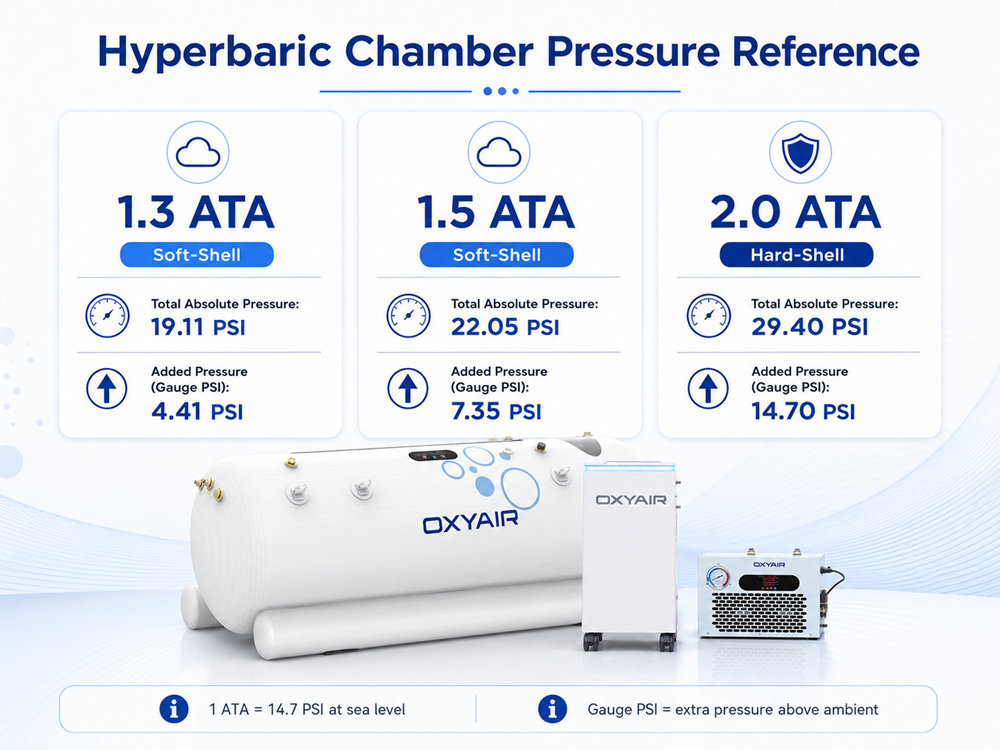
| Chamber Type | Total Absolute Pressure | Added Pressure (Gauge PSI) |
|---|---|---|
| 1.3 ATA (Soft-Shell hyperbaric chamber) | 19.11 PSI | 4.41 PSI |
| 1.5 ATA (Soft-Shell hyperbaric chamber) | 22.05 PSI | 7.35 PSI |
| 2.0 ATA (Hard-Shell hyperbaric chamber) | 29.40 PSI | 14.70 PSI |
 2. Absolute PSI vs. Gauge PSI Explained
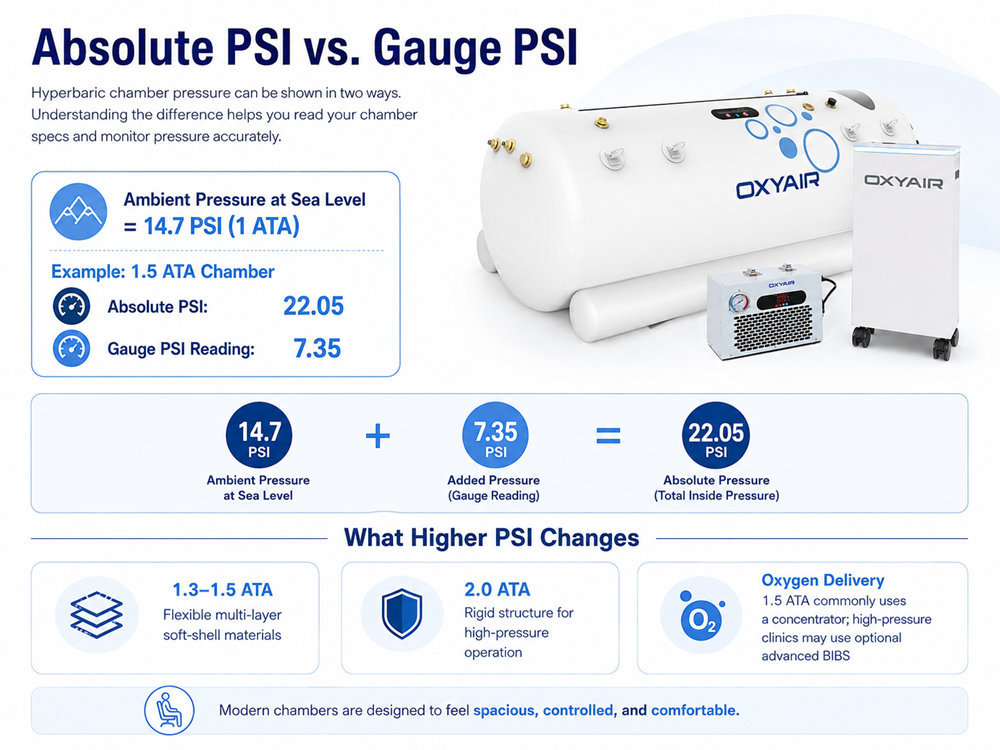
To really understand equipment specs, you need to know the difference between Absolute Pressure and Gauge Pressure.
When you see a 1.5 ATA chamber, the total environment inside is 22.05 Absolute PSI. However, the machine's gauge will likely read 7.35 PSI. Why? Because the gauge only measures the extra pressure the compressor is actively pumping into the cabin, ignoring the natural 14.7 PSI of the outside world. This is a crucial metric when evaluating compressor performance.
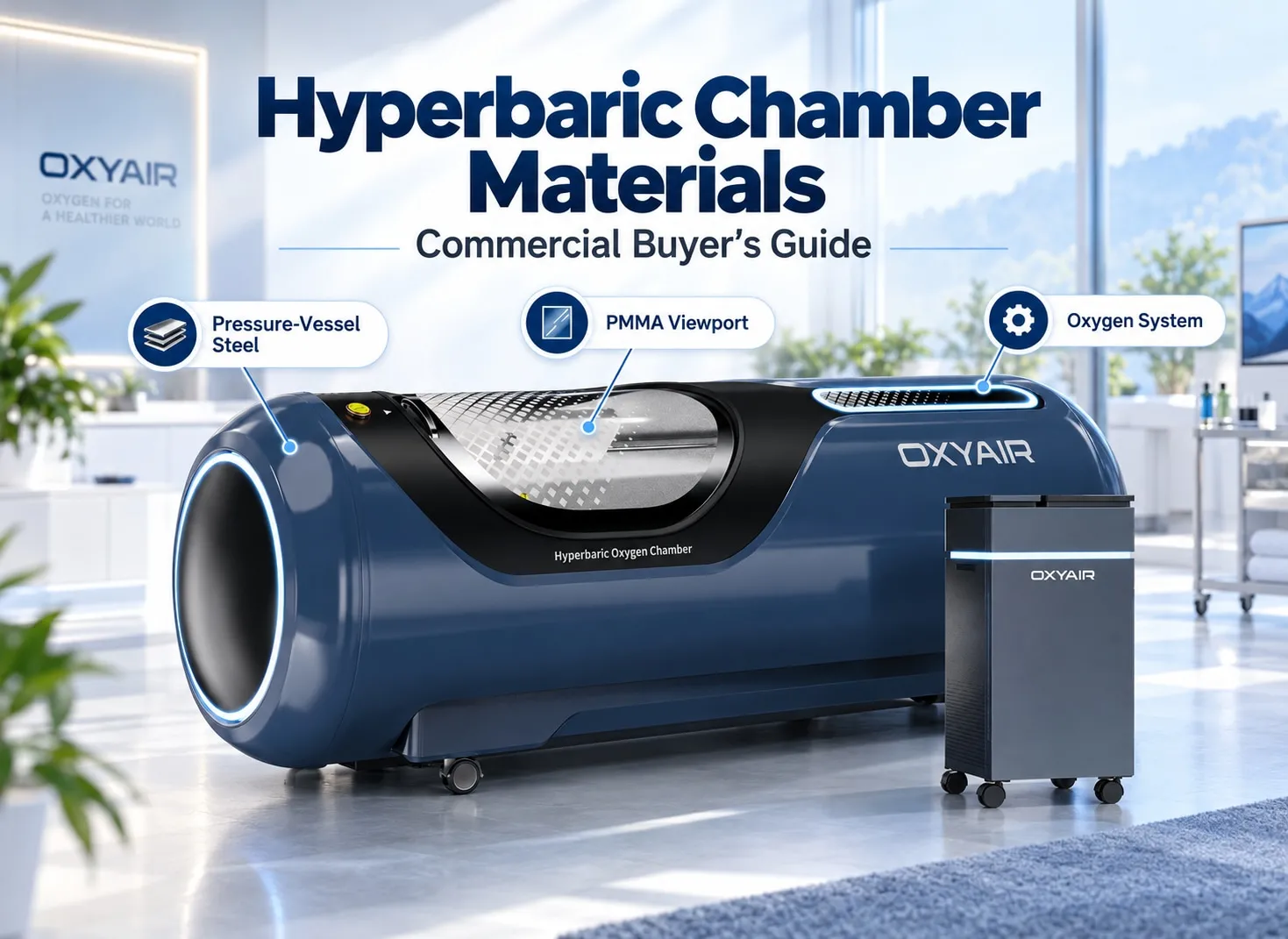
3. How Target PSI Determines Chamber Materials
The target PSI dictates the engineering and materials used to build the chamber.
19.11 to 22.05 PSI (1.3 - 1.5 ATA): At this pressure range, we can use high-strength, flexible materials like TPU or multi-layer nylon. These Portable Soft-Shell chambers are extremely durable yet lightweight enough for flexible deployment.
29.40 PSI (2.0 ATA): When you double the natural atmospheric pressure, you need rigid structural integrity. This requires robust Hard-Shell materials, usually crafted from thick acrylic or aerospace-grade steel/aluminum, to safely maintain the high-pressure environment.
4. Oxygen Delivery Systems at High PSI
How does the oxygen get to the user under these pressures?
For home-use or light commercial units operating at 22.05 PSI (1.5 ATA), users simply breathe ambient oxygen generated by a high-efficiency oxygen concentrator. There is absolutely no need for a complex BIBS (Built-In Breathing System) mask, making the experience highly comfortable and easy to manage.
For high-pressure commercial operations at 29.40 PSI (2.0 ATA), while a BIBS mask is not a mandatory standard for every hard chamber on the market, it is an advanced technology we proudly own and offer. We can integrate high-end BIBS systems for clinics that require highly targeted, zero-leakage oxygen delivery protocols.
5. Chamber Space vs. PSI: The Comfort Equation
A common misconception is that high PSI means a cramped, tight tube. This couldn't be further from the truth. Modern hyperbaric chambers—whether a 1.5 ATA soft-shell or a 2.0 ATA hard-shell—are designed to be significantly larger than a human body.
This massive interior volume, combined with smooth, controlled compression valves, ensures that even at nearly 30 PSI, the user feels completely spacious, relaxed, and safe without any sense of claustrophobia.
Ready to upgrade your wellness facility?
Understanding PSI is the first step. Contact our engineering and sales team today to find the exact pressure specification that fits your business model.
-
Oxygen Purity, Flow & Pressure: Hyperbaric Chamber Guide
Sep. 30, 2026
-

How to Compare Complete Home Hyperbaric Chamber Packages
Sep. 30, 2026
-
Hyperbaric Chamber Materials: Commercial Buyer’s Guide
Sep. 30, 2026
-