
How to Identify the Best Hyperbaric Chamber Manufacturer for Your Business
Defining the Gold Standard: How to Identify the Best Hyperbaric Chamber Manufacturer for Your Business
In the rapidly expanding wellness and medical technology market, the demand for Hyperbaric Oxygen Therapy (HBOT) solutions is surging. For clinic owners, wellness centers, and medical distributors, sourcing equipment is not merely a purchase—it is a critical investment in patient safety and business reputation. Choosing a reliable Hyperbaric Chamber Manufacturer is the foundational step in ensuring operational excellence.
However, the global market is flooded with varying qualities of equipment. How do you distinguish a high-grade engineering partner from a generic assembler? This guide delves into the technical and compliance criteria necessary to select the Best Hyperbaric Chamber Manufacturer for your professional needs.
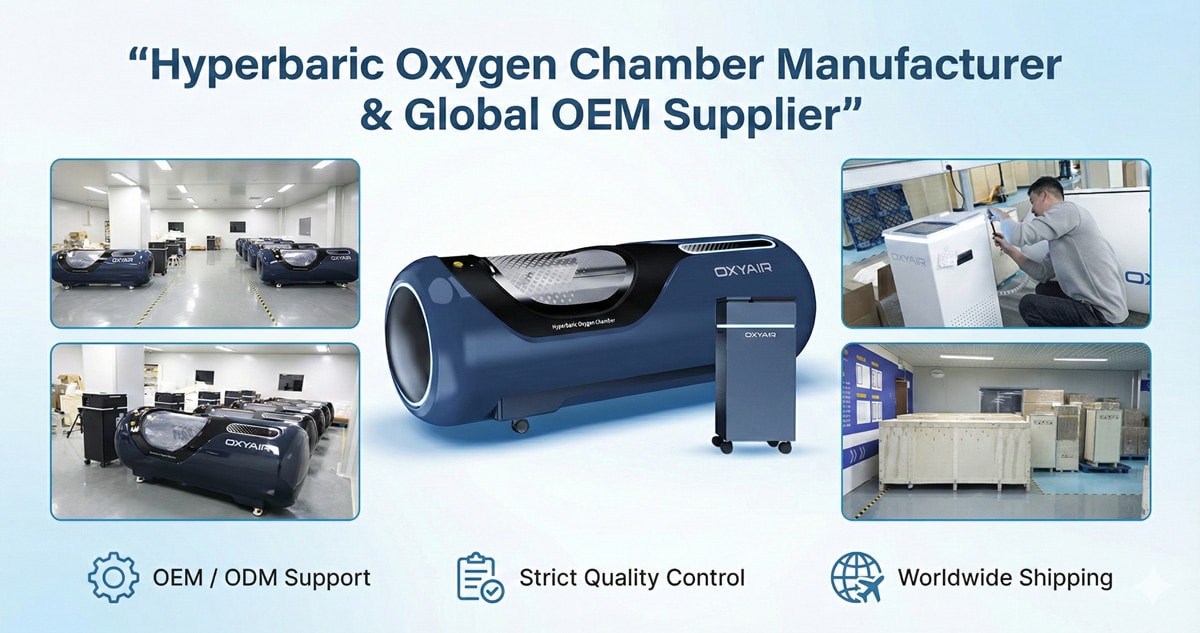
1. Compliance and Certification: The Non-Negotiables
When evaluating a Hyperbaric Chamber supplier, the conversation must begin with safety standards. Unlike consumer electronics, HBOT equipment operates under pressure, making structural integrity and biocompatibility paramount.
A professional buyer should prioritize manufacturers who hold verifiable certifications. Look for ISO and CE marking. These are not just badges; they are evidence that the Hyperbaric Chamber Manufacturer adheres to rigorous quality control processes, from raw material sourcing to final pressure testing. Without these, the liability risk for your business increases significantly.
2. Engineering Precision and Material Science
The longevity of a chamber depends entirely on the materials used. A top-tier manufacturer does not cut corners on the hull construction.
Hard vs. Soft Chamber Construction
Whether you are sourcing hard shell or soft shell chambers, the engineering tolerances matter.
For Soft Chambers: Inquire about the TPU (Thermoplastic Polyurethane) grade. High-quality TPU is non-toxic, eco-friendly, and incredibly durable against repeated pressurization cycles.
For Hard Chambers: Focus on the alloy quality (usually stainless steel or aluminum) and the viewing port material (polycarbonate is preferred for safety).
An experienced Hyperbaric Chamber OEM will be transparent about their bonding technologies—specifically, how they seal the seams. Radio Frequency (RF) welding is generally superior to glue, as it prevents leakage and chemical off-gassing over time.
3. The Importance of OEM Capabilities in Branding
For B2B clients, off-the-shelf solutions are not always sufficient. You may need chambers that align with your clinic's aesthetic or require specific pressure settings for unique protocols. This is where the distinction between a reseller and a true Hyperbaric Chamber OEM becomes clear.
A manufacturer with strong R&D capabilities can offer customization in size, color, logo placement, and even internal control systems. This allows distributors to build their own brand equity rather than just selling a generic product.
4. Evaluating the Oxygen Delivery System
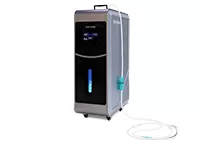
The chamber is only half the equation; the oxygen concentrator and cooling systems are equally vital. The Best Hyperbaric Chamber Manufacturer will provide an integrated solution where the oxygen purity is consistent (typically 93% ±3%) and the airflow is optimized to prevent carbon dioxide buildup.
Ask potential suppliers about their filtration systems and compressor durability. In a commercial setting, these machines run for hours daily; overheating or failure is not an option.
5. Testing Protocols and Quality Assurance
Before a unit leaves the factory, what tests does it undergo? A reliable manufacturer performs multiple rounds of pressure testing at levels higher than the rated operating pressure (e.g., testing at 1.5 ATA for a 1.3 ATA chamber) to ensure a safety margin.
Request inspection reports or videos of their testing facility. This level of transparency is the hallmark of a partner who values long-term business relationships over quick sales.
Frequently Asked Questions (FAQ)
Q1: Why is ISO certification important for a Hyperbaric Chamber Manufacturer?
ISO certification, particularly ISO, indicates that the manufacturer complies with international standards for medical device quality management, ensuring consistency, safety, and traceability of the products.
Q2: What is the difference between an OEM and a ODM manufacturer?
An OEM (Original Equipment Manufacturer) produces products according to your specifications and branding. An ODM (Original Design Manufacturer) designs and builds the product entirely, which you then rebrand. A versatile Hyperbaric Chamber supplier often offers both services.
Q3: How long is the typical lifespan of a commercial-grade soft chamber?
With proper maintenance and high-quality TPU materials, a commercial-grade soft chamber can last 5 to 7 years or more, even with frequent daily usage.
Q4: Can a manufacturer customize the pressure settings?
Yes, a capable Hyperbaric Chamber OEM can adjust safety valves and compressor settings to meet specific pressure requirements (e.g., 1.3 ATA vs. 1.5 ATA), provided it remains within safe engineering limits.
Q5: How do I verify the safety of the viewing windows?
Ensure the manufacturer uses high-grade polycarbonate rather than standard acrylic, and ask for pressure test data specifically regarding the window seals.
Secure Your Business with Certified Quality
Your clients trust you with their health; you need a manufacturer you can trust with your equipment. Don't leave your reputation to chance.
Are you ready to equip your facility with certified, high-performance hyperbaric solutions?