


The Science of HBOT Muscle Recovery: How Hyper-Oxygenation Repairs Tissue
The Science of HBOT Muscle Recovery: How Hyper-Oxygenation Repairs Tissue
Athletic performance is often measured by what happens on the field, but true longevity is determined by what happens in the cells during rest. For elite performers, the traditional "rest day" is being replaced by active protocols involving the post workout recovery chamber. By leveraging the physics of pressurized oxygen, athletes are now able to influence the molecular signaling pathways that govern muscle repair.
In This Article:
1. The Cellular Mechanism of HBOT Muscle Recovery
The primary hurdle in healing damaged muscle tissue is oxygen delivery. When muscles undergo intense eccentric loading, micro-tears lead to localized swelling (edema). This swelling increases the distance oxygen must travel from the capillaries to the damaged cells, creating a "hypoxic zone."
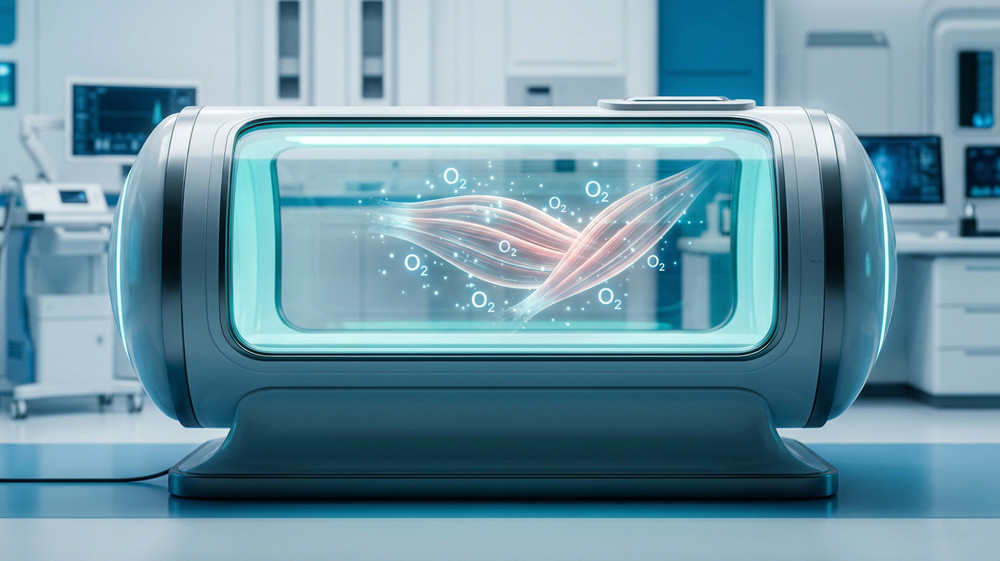
During HBOT muscle recovery, the increased atmospheric pressure forces oxygen to dissolve directly into the blood plasma. This allows oxygen to bypass the physical barriers created by inflammation, reaching deep into the muscle fibers where standard red blood cells cannot easily flow.
2. ATP Synthesis: Fueling the Repair Process
Muscle repair is an energy-intensive metabolic process. The mitochondria in your cells require oxygen to produce Adenosine Triphosphate (ATP). Without sufficient oxygen, cells fall back on anaerobic metabolism, which is inefficient and leads to the accumulation of acidic waste.
3. Why a Muscle Recovery Hyperbaric Chamber Triggers Regeneration
Repairing a muscle is good; regenerating it is better. Research has shown that a muscle recovery hyperbaric chamber does more than just provide oxygen—it acts as a signaling device for the body's internal repair crew: Stem Cells.
Nitric Oxide Activation: High-pressure oxygen stimulates the release of Nitric Oxide, which triggers the proliferation of muscle satellite cells.
Stem Cell Mobilization: A single session can significantly increase the concentration of circulating stem cells, which migrate to the training-induced injury sites to form new, stronger muscle tissue.
4. Scientific Data: Biomarkers of Recovery
To understand the efficacy of the post workout recovery chamber, we look at key blood markers that indicate muscle damage and systemic stress.
| Biomarker | Standard Recovery | HBOT Muscle Recovery |
|---|---|---|
| Creatine Kinase (CK) | Remains elevated for 48-72h | Significant reduction within 24h |
| Interleukin-6 (IL-6) | Prolonged inflammatory peak | Rapid suppression of pro-inflammatory cytokines |
| Lactate Clearance | Passive (1-2 hours) | Accelerated via improved microcirculation |
By optimizing these cellular variables, hyperbaric technology transforms the "cooldown" phase into a high-speed reconstruction phase. For those looking to maintain peak physical condition, understanding the science behind the muscle recovery hyperbaric chamber is the first step toward a smarter training regimen.