

How to Keep Cool in a Hyperbaric Oxygen Chamber: Comfort, Safety, and Buying Tips
Feeling warm inside a hyperbaric oxygen chamber is a common concern, especially during the first few minutes of pressurization. For clinics, wellness centers, recovery studios, and distributors, chamber comfort is more than a small detail. It directly affects the user experience, session completion, repeat visits, and long-term business value.
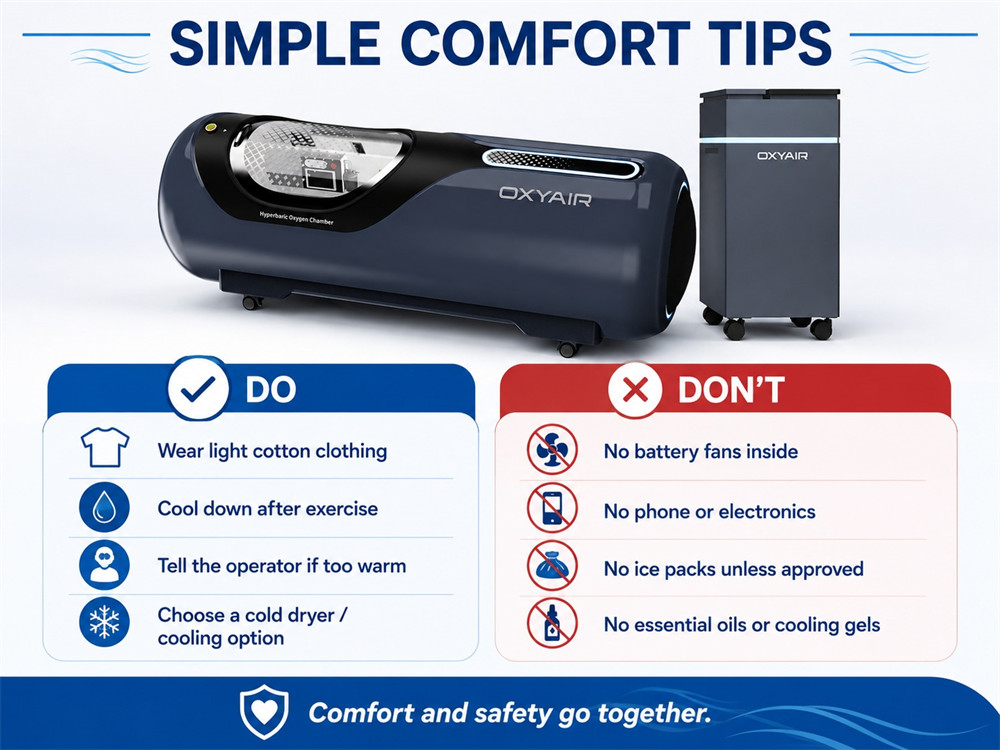
To keep cool in a hyperbaric oxygen chamber, cool the room before the session, wear light cotton clothing, avoid entering right after exercise, and tell the operator if you feel too warm. For long-term comfort, choose a chamber with a cold dryer, air dryer, ventilation system, or chamber cooling option. Do not bring battery fans, electronics, ice packs, cooling gels, or unapproved items into the chamber unless the manufacturer or facility confirms they are safe.
This guide explains why chambers can feel warm, what users can safely do, what should be avoided, and what B2B buyers should check before purchasing a hyperbaric chamber.
1. Why Does a Hyperbaric Oxygen Chamber Feel Warm?
A hyperbaric oxygen chamber may feel warmer during pressurization because compressed air can increase in temperature. Many users notice this in the first few minutes of the session. After the chamber reaches treatment pressure, some systems can adjust airflow or vent the chamber to make the environment more comfortable.
Warmth can also come from other factors: room temperature, humidity, body heat, clothing, poor ventilation, compressor heat, or a missing air drying system. In many cases, the problem is not only “heat.” It may be a combination of warm air, moisture, and a stuffy feeling.
Compressed air may feel warmer during the first part of the session.
Moist air can feel sticky, heavy, and uncomfortable even if the temperature is not extremely high.
Compressors and supporting systems need good ventilation to avoid heat buildup.
2. Is It Normal to Feel Warm During HBOT?
A mild warm feeling during pressurization can be normal. However, the user should not feel trapped, overheated, dizzy, nauseous, short of breath, or panicked. Commercial facilities should treat heat complaints as a comfort and safety signal, not as something users must tolerate.
| Feeling | Usually Acceptable? | What to Do |
|---|---|---|
| Mild warmth during pressurization | Often acceptable | Wait for airflow adjustment and tell the operator if needed. |
| Warm and humid feeling | Depends | Check cold dryer, air dryer, ventilation, and room temperature. |
| Dizziness or nausea | No | Pause or stop the session and assess the user. |
| Chest tightness or panic | No | Inform the operator immediately and stop if symptoms continue. |
| Heavy sweating | No | Reassess comfort, room cooling, and equipment setup. |
3. The Safest Ways to Keep Cool During a Session
Cool the Room Before the Session
The easiest way to improve comfort is to control the room first. Turn on air conditioning before the session, avoid direct sunlight, and keep the chamber away from hot windows, heaters, or poorly ventilated corners.
Wear Light, Dry Cotton Clothing
Light cotton clothing is more breathable and helps reduce static concerns. Avoid heavy sportswear, fleece, synthetic tight clothing, wool, oily skin products, perfume, essential oils, and strong sprays unless the facility or manufacturer approves them.
Avoid Entering Right After Exercise, Sauna, or Hot Shower
If a user just finished a workout, sauna, or hot shower, their body temperature may already be elevated. Let the user cool down, wipe off sweat, and change into dry clothing before entering the chamber.
Let the Operator Adjust Ventilation
In commercial settings, the operator should manage airflow, venting, room temperature, and session comfort. Users should not try to solve the problem by bringing their own fan, cooling device, or unapproved item into the chamber.
Keep Supporting Equipment Well Ventilated
Compressors, oxygen concentrators, cold dryers, and filters should have enough room for heat dissipation. Do not place equipment in closed cabinets or block air inlets and outlets.
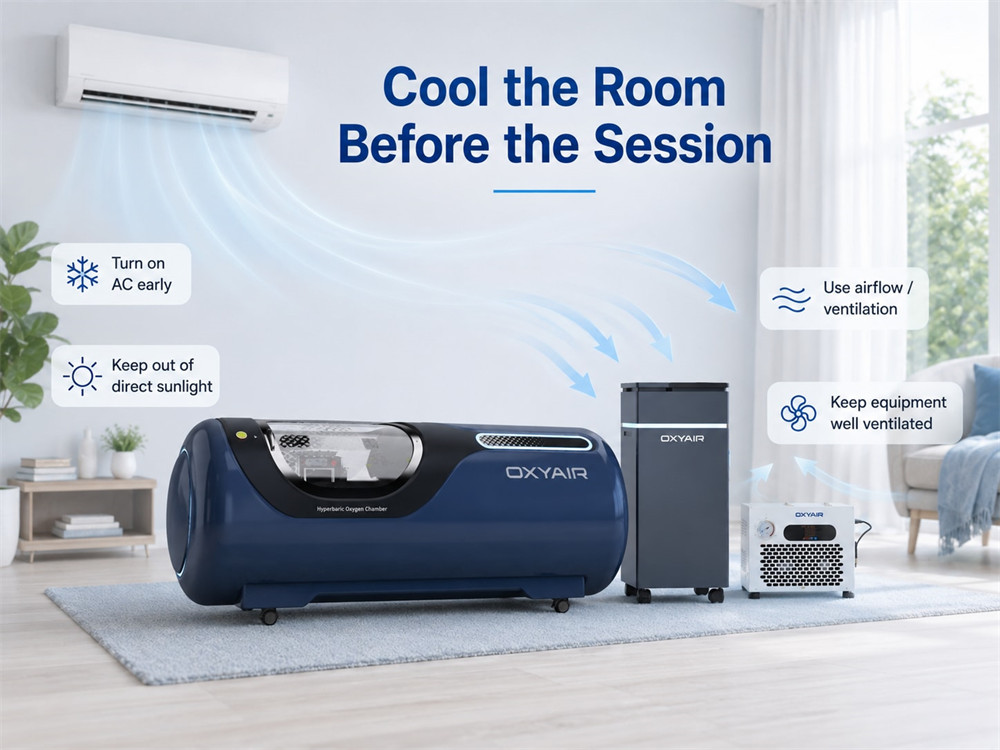
Commercial comfort rule: Control the room, control the airflow, control the equipment setup. Do not rely on unsafe personal cooling items inside the chamber.
4. Buying Tip: Choose a Chamber With a Cold Dryer or Cooling System
If chamber comfort matters, do not only compare pressure level, size, and oxygen supply. The air handling system is also important.
A cold dryer or air dryer helps remove moisture from compressed air before it enters the chamber. This can reduce the hot, humid, sticky feeling that some users experience. A cold dryer is not exactly the same as an air conditioner, but it can make the air feel drier and more comfortable.
For clinics, wellness centers, recovery studios, resort spas, and high-frequency commercial use, an air cooling system or chamber air conditioner may offer stronger temperature control, especially for long sessions, warm climates, or repeated daily use.
| Buyer Question | Why It Matters |
|---|---|
| Does the chamber include a cold dryer or air dryer? | Helps reduce humid and sticky airflow. |
| Does it support chamber air cooling? | Improves comfort during long sessions or warm weather. |
| Is temperature or humidity displayed? | Helps staff monitor user comfort more clearly. |
| Is the compressor designed for continuous use? | Reduces heat buildup during frequent commercial operation. |
| Are filters, dryers, and cooling parts easy to maintain? | Keeps airflow stable and reduces downtime. |
5. What Not to Bring Into a Hyperbaric Oxygen Chamber to Stay Cool
Keeping cool should never come at the cost of chamber safety. Oxygen-rich environments can increase fire risk, so any item brought inside must follow the manufacturer’s instructions and facility safety rules.
| Item | Safe to Bring In? | Why |
|---|---|---|
| Battery fan or USB fan | No, unless approved | Battery and electronic device safety risk. |
| Phone, tablet, earbuds | No | Electronic devices are usually restricted in HBOT environments. |
| Ice pack | Only if approved | Material, condensation, and pressure compatibility concerns. |
| Cooling gel mat | Only if approved | Unknown material and sealing safety. |
| Wet towel | Usually not recommended | Adds humidity and may make the chamber feel more stuffy. |
| Essential oils or cooling balm | No | Oil, vapor, odor, and fire safety concerns. |
| Light cotton clothing | Yes, if allowed | More breathable and usually more compatible with HBOT safety rules. |
6. How Clinics and Wellness Centers Should Manage Chamber Temperature
Commercial facilities should not leave cooling comfort to the user. A simple temperature and comfort SOP can help reduce complaints and improve session quality.
| Stage | Facility Action |
|---|---|
| Before session | Check room temperature, clothing, user condition, and prohibited items. |
| During pressurization | Explain that warmth may increase briefly and ask the user to report discomfort. |
| At treatment pressure | Use venting or airflow adjustment when available. |
| During session | Ask about heat, chest tightness, dizziness, anxiety, or heavy sweating. |
| After session | Record complaints and inspect airflow, room HVAC, cold dryer, and compressor setup. |
| Weekly or monthly | Check filters, dryer performance, compressor ventilation, and maintenance schedule. |
7. Comfort Is a Business Feature, Not Just a User Preference
For commercial HBOT facilities, cooling comfort can affect more than one session. If users feel hot, humid, or stuffy, they may end the session early, feel anxious, leave negative feedback, or hesitate to book again.
A better air handling system helps create a smoother user experience. This is especially important for recovery studios, sports centers, wellness clinics, resort spas, and distributors serving warm climates.
B2B takeaway: Cold dryer, air dryer, ventilation, and cooling options are not just technical accessories. They are part of user comfort, customer satisfaction, and long-term business performance.
8. Troubleshooting: Why Is My Chamber Still Too Hot?
| Problem | Possible Cause | Suggested Check |
|---|---|---|
| Warm air enters the chamber | Compressor heat or poor cooling path | Check cold dryer, airflow route, and compressor ventilation. |
| Sticky, humid feeling | Moisture in compressed air | Use or inspect air dryer / cold dryer. |
| Chamber heats up over time | Poor room HVAC or repeated sessions | Improve room cooling and allow equipment recovery time. |
| User feels stuffy | Low airflow, humidity, or anxiety | Check ventilation, user comfort, and communication process. |
| Only summer complaints | Warm climate or poor room cooling | Consider stronger HVAC or cooling configuration. |
9. When Should the Session Be Paused or Stopped?
If the user only feels mildly warm, the operator may be able to adjust ventilation or room cooling. However, the session should be paused or stopped if the user feels seriously uncomfortable.
10. FAQ: Keeping Cool in a Hyperbaric Oxygen Chamber
Why does a hyperbaric oxygen chamber get hot?
A chamber may feel warmer during pressurization because compressed air can increase temperature. Room temperature, humidity, body heat, clothing, and equipment ventilation can also affect comfort.
How can I keep cool in a hyperbaric chamber?
Cool the room before the session, wear light cotton clothing, avoid entering right after exercise, keep equipment well ventilated, and ask the operator to adjust airflow if you feel too warm.
Can I bring a fan into a hyperbaric oxygen chamber?
Do not bring a battery fan, USB fan, phone fan, or any electronic device into the chamber unless the manufacturer or facility specifically approves it.
Does a cold dryer make the chamber cooler?
A cold dryer mainly helps cool and dry compressed air by removing moisture. It is not the same as an air conditioner, but it can reduce the hot, humid, sticky feeling inside the chamber.
Do commercial hyperbaric chambers need air conditioning?
For high-frequency commercial use, warm climates, or long sessions, an air cooling system or chamber air conditioner can significantly improve user comfort.
Conclusion
Keeping cool in a hyperbaric oxygen chamber is not just about comfort tricks. It depends on room temperature, clothing, airflow, equipment ventilation, cold dryer performance, and the chamber’s cooling configuration.
For commercial buyers, cooling comfort should be considered before purchase. A chamber with a cold dryer, air dryer, ventilation system, or cooling option can provide a more comfortable experience and reduce user complaints.
Need a More Comfortable Hyperbaric Chamber Solution?
Olive Oxygen provides hyperbaric chamber solutions for clinics, wellness centers, recovery studios, spas, distributors, and commercial projects. Contact us to compare chamber options with cold dryer, air dryer, ventilation, and cooling system configurations.
Contact Olive Oxygen