

How to Clear Ears in a Hyperbaric Chamber: A Safety Guide for HBOT Users and Operators
If you are new to hyperbaric oxygen therapy, you may notice your ears feel full, blocked, or like they need to “pop” when the chamber starts pressurizing. This is usually related to pressure changes, not earwax or ear cleaning.
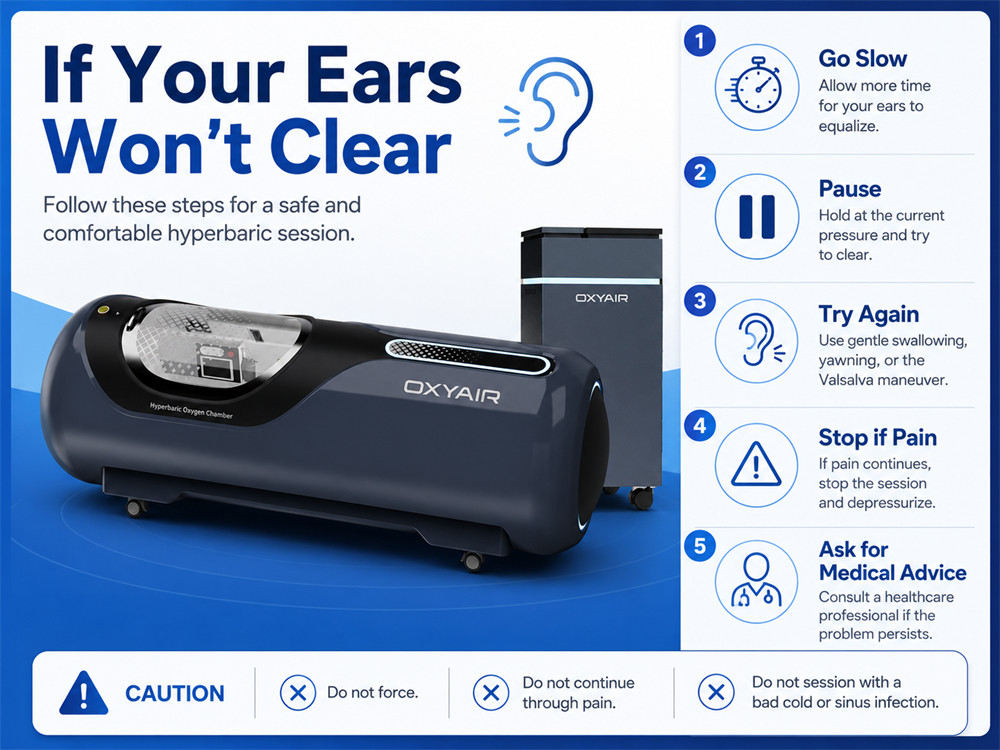
To clear your ears in a hyperbaric chamber, start equalizing as soon as you feel ear fullness or pressure. Try swallowing, yawning, gently moving your jaw, pinching your nose and swallowing, or using a gentle Valsalva maneuver. Do not force it. If pressure keeps building or you feel pain, tell the chamber operator immediately and stop further pressurization.
This guide is written for clinics, wellness centers, recovery studios, spas, distributors, and HBOT chamber operators who want to provide a safer and more comfortable user experience.
1. What Does “Clear Ears” Mean in a Hyperbaric Chamber?
In HBOT, “clear your ears” usually means equalizing ear pressure. Many people also call it “popping your ears.” It does not mean cleaning earwax from the ear canal.
During pressurization, the air pressure around you increases. Your middle ear needs to adjust to that pressure change. The small passage that helps with this is called the Eustachian tube. When it opens, air can move into the middle ear and the pressure on both sides of the eardrum can become more balanced.
Simple explanation: Clearing your ears means helping your Eustachian tubes open so your ears can adjust to the pressure change inside the chamber.
2. Why Do Your Ears Feel Blocked in a Hyperbaric Chamber?
When a hyperbaric chamber starts to pressurize, the pressure outside your eardrum increases. If the pressure inside your middle ear does not adjust at the same pace, your eardrum may feel pulled or tight. This can feel like fullness, blockage, muffled hearing, or pressure in one or both ears.
This same type of pressure problem can happen during airplane takeoff and landing, scuba diving, altitude changes, and hyperbaric oxygen therapy. The main issue is not the chamber itself. It is the pressure difference between the outside environment and the middle ear.
The chamber slowly increases pressure during the compression phase.
The Eustachian tube must open to help balance pressure.
If pressure does not equalize, the user may feel ear fullness, muffled hearing, or pain.
3. When Does Ear Pressure Usually Happen During HBOT?
Most ear pressure complaints happen during the compression phase, when the chamber is increasing pressure. This is when users should be reminded to equalize early and often.
Some users may also feel ear popping during decompression, when the pressure decreases. In many cases, this is less difficult because the middle ear may release pressure more naturally. However, if a user feels severe pain, dizziness, or hearing changes during any stage, the operator should take it seriously.
| HBOT Stage | What Users May Feel | What to Do |
|---|---|---|
| Before pressurization | Normal hearing and no pressure. | Explain ear clearing methods before the session starts. |
| During compression | Fullness, pressure, popping, or muffled hearing. | Equalize early and often. Pause compression if needed. |
| If pain starts | Sharp pain or strong pressure buildup. | Do not keep pressurizing. Stop or pause and reassess. |
| During decompression | Natural popping may happen. | Report dizziness, severe pain, or hearing changes. |
4. Is Ear Popping Normal in a Hyperbaric Chamber?
A gentle “pop” can be normal. It often means the pressure is equalizing. Mild fullness can also happen during the early part of the session, especially for first-time users.
However, pain is not something users should push through. Ear pain, hearing loss, dizziness, ringing in the ear, or fluid from the ear should be treated as warning signs. HBOT staff should pause, communicate, and take action before discomfort becomes an injury risk.
Operator reminder: Ear pressure is common. Ear pain should not be ignored.
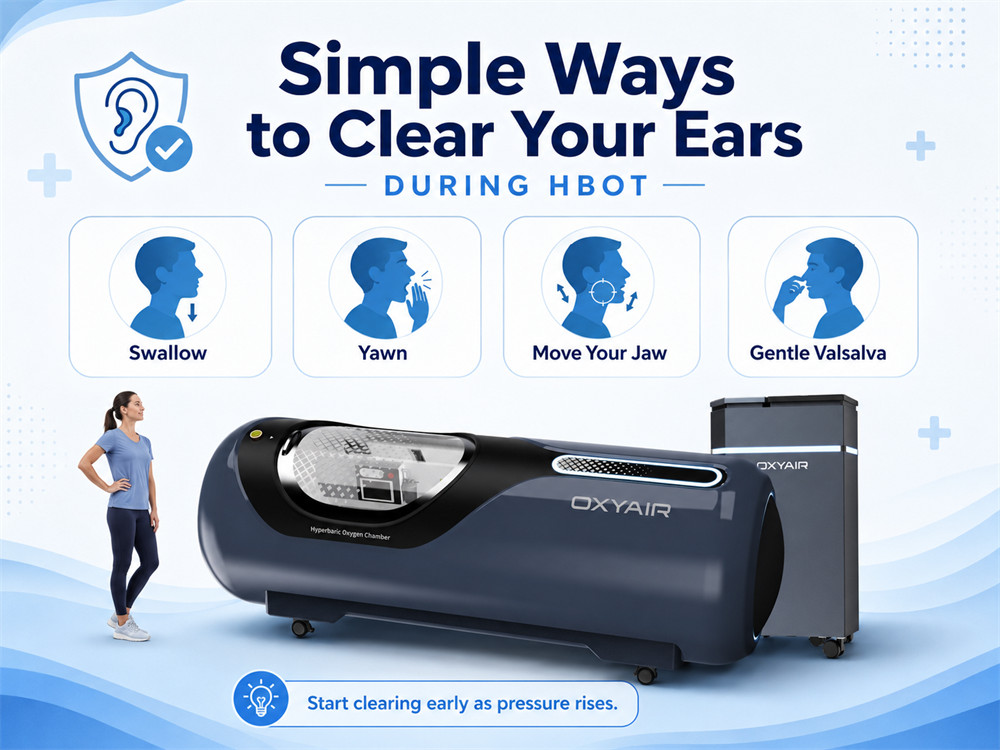
5. How to Clear Ears in a Hyperbaric Chamber: 6 Common Techniques
Users should practice these methods before the session starts. The goal is to equalize gently and repeatedly, not to force the ears to pop.
1. Swallowing
Swallowing is one of the easiest methods. It helps activate the muscles that open the Eustachian tubes. Users can swallow repeatedly as the chamber begins to pressurize.
2. Yawning
A wide, gentle yawn can help open the Eustachian tubes and release pressure. This is a simple method for beginners.
3. Jaw Movement
Moving the jaw side to side, or making a gentle chewing motion, can help some users relieve mild fullness.
4. Toynbee Maneuver
The Toynbee maneuver means pinching the nose, closing the mouth, and swallowing. It can be useful when swallowing alone is not enough.
5. Gentle Valsalva Maneuver
To do a gentle Valsalva, pinch the nose, close the mouth, and blow very gently as if trying to breathe out through the nose. The word gentle is important. Users should never blow hard or force pressure into the ears.
6. Head Turn + Swallow
If one ear feels more blocked than the other, turning the head slightly to one side and swallowing may help. This should be done slowly and comfortably.
| Method | How to Do It | Best For | Caution |
|---|---|---|---|
| Swallowing | Swallow repeatedly. | Mild pressure. | Start early. |
| Yawning | Open the mouth wide like a yawn. | Ear fullness. | Do not force the jaw. |
| Toynbee | Pinch nose and swallow. | Blocked feeling. | Repeat slowly. |
| Gentle Valsalva | Pinch nose and gently blow. | Stubborn pressure. | Never blow hard. |
| Head turn + swallow | Turn head gently and swallow. | One-sided pressure. | Stop if pain increases. |
6. The Most Important Rule: Equalize Early, Often, and Gently
Do not wait until the user feels pain. Ear clearing works best when it starts at the first sign of fullness or pressure. During compression, operators should remind new users to equalize several times, even if the pressure is still mild.
Fullness, blocked feeling, or muffled hearing.
Swallow, yawn, move jaw, or try Toynbee.
Tell the operator and pause compression.
Stop pressurization and reassess.
7. What Should Operators Do If a User Cannot Clear Their Ears?
For commercial HBOT settings, ear pressure management should be part of the user safety process. Operators should not simply continue the session if a user reports pain or worsening pressure.
Commercial HBOT Ear Pressure Response SOP
Ask before the session: Does the user have a cold, allergy, sinus infection, ear infection, ear pain, or recent ear surgery?
Explain ear clearing methods before pressurization starts.
Start compression slowly, especially for first-time users.
Remind the user to equalize early and often.
Pause compression if ear pressure does not clear.
Stop the session if pain persists or symptoms worsen.
Recommend medical evaluation for repeated ear pressure problems or concerning symptoms.
8. When Should a User Stop the Session or Seek Medical Advice?
Mild fullness is one thing. Pain or neurological symptoms are different. If any of the following happen, stop further pressurization and seek professional advice if symptoms continue.
Safety note: Do not ask users to “push through” ear pain. If pressure cannot be equalized, the session should be paused or stopped.
9. Who Is More Likely to Have Trouble Clearing Ears?
Some users may have more trouble equalizing pressure because the Eustachian tubes may be swollen, blocked, or less responsive.
| Higher-Risk Situation | Why It Matters |
|---|---|
| Cold or stuffy nose | Congestion can make it harder for the Eustachian tubes to open. |
| Sinus infection | Sinus pressure may worsen during pressure changes. |
| Allergies or hay fever | Nasal swelling can affect pressure equalization. |
| Middle ear infection | Pain or inflammation may increase barotrauma risk. |
| Recent ear surgery | Requires medical clearance before pressure exposure. |
| First-time users | They may not know how to equalize early enough. |
10. How Commercial Facilities Can Reduce Ear Pressure Complaints
For wellness centers, recovery studios, clinics, and spas, ear pressure complaints can often be reduced with better preparation and communication.
Give first-time users a short ear equalization explanation before the session.
Use a slower compression rate for beginners when possible.
Ask about colds, sinus infections, allergies, ear infections, and recent ear surgery.
Show users how to swallow, yawn, move the jaw, and try Toynbee before they enter the chamber.
Create a clear communication signal for discomfort.
Pause compression if the user cannot clear their ears.
Record recurring issues and recommend medical evaluation when appropriate.
Commercial Support Matters
For B2B buyers, chamber operation guidance is just as important as the equipment itself. Olive Oxygen supports commercial users with product options, usage guidance, accessory support, and after-sales service for clinics, wellness centers, recovery studios, and distributors.
12. FAQ: Clearing Ears in a Hyperbaric Chamber
Why do ears hurt in a hyperbaric chamber?
Ear pain usually happens when the pressure outside the eardrum changes faster than the middle ear can equalize. If the Eustachian tube does not open in time, pressure can build and cause discomfort or pain.
How do you pop your ears during HBOT?
Try swallowing, yawning, moving your jaw, pinching your nose and swallowing, or using a very gentle Valsalva maneuver. Start early and do not force it.
Is ear popping normal in a hyperbaric chamber?
A gentle pop can be normal and may mean the pressure is equalizing. Sharp pain, dizziness, hearing loss, ringing, or fluid from the ear is not normal and should be checked.
What should operators do if a user cannot clear their ears?
Pause compression, guide the user through gentle equalization methods, and do not continue pressurizing if pain persists. Recurring issues should be referred to a healthcare provider.
Can users enter a hyperbaric chamber with a cold?
Severe congestion, sinus infection, or ear infection can make pressure equalization harder. Users should talk with a healthcare provider or chamber operator before starting a session if they are sick or congested.
Do commercial facilities need an ear equalization protocol?
Yes. A simple protocol helps staff screen users, explain equalization, respond to discomfort, and reduce preventable ear pressure complaints.
Conclusion
Ear pressure is one of the most common comfort issues during hyperbaric chamber use, especially during compression. The best approach is simple: start early, equalize often, stay gentle, and stop if it hurts.
For commercial HBOT facilities, proper ear pressure guidance is part of a safer and more professional user experience. Staff should explain equalization before the session, monitor user feedback during pressurization, and pause the session when discomfort does not improve.
Need a Hyperbaric Chamber Solution for Your Business?
Olive Oxygen provides hyperbaric chamber solutions for clinics, wellness centers, recovery studios, spas, distributors, and home wellness projects. Contact us for product options, operation guidance, user training support, accessory support, and global delivery planning.
Contact Olive Oxygen