
How to Compare Hyperbaric Chamber Specifications
ATA, oxygen delivery, size, noise, and materials are among the first specifications buyers ask about. But the largest number on a product sheet is not always the most useful one. Each specification needs to be considered in relation to the chamber type, installation site, intended use, and supporting equipment.
1. ATA: Verify the Working Pressure
ATA means atmospheres absolute. Normal sea-level pressure is approximately 1.0 ATA. Therefore, a chamber operating at 1.5 ATA has a total internal pressure about 50% above normal atmospheric pressure. ATA is not the same as additional gauge pressure.
| Pressure | Approximate Gauge Pressure at Sea Level |
|---|---|
| 1.3 ATA | 4.4 psig |
| 1.5 ATA | 7.4 psig |
| 2.0 ATA | 14.7 psig |
| 3.0 ATA | 29.4 psig |
Ask for the maximum operating pressure, normal adjustable range, pressurization rate, depressurization rate, and supporting pressure-vessel documentation. A higher maximum ATA is not automatically the right choice; the appropriate range depends on the intended application, local requirements, and operating protocol.
2. Oxygen Delivery: Follow the Complete Gas Path
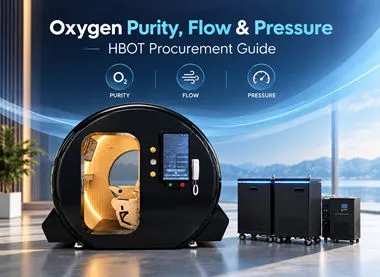
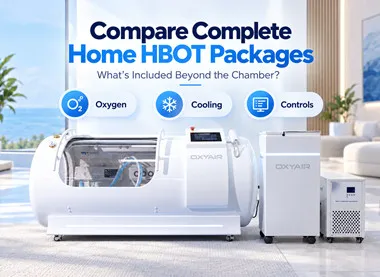
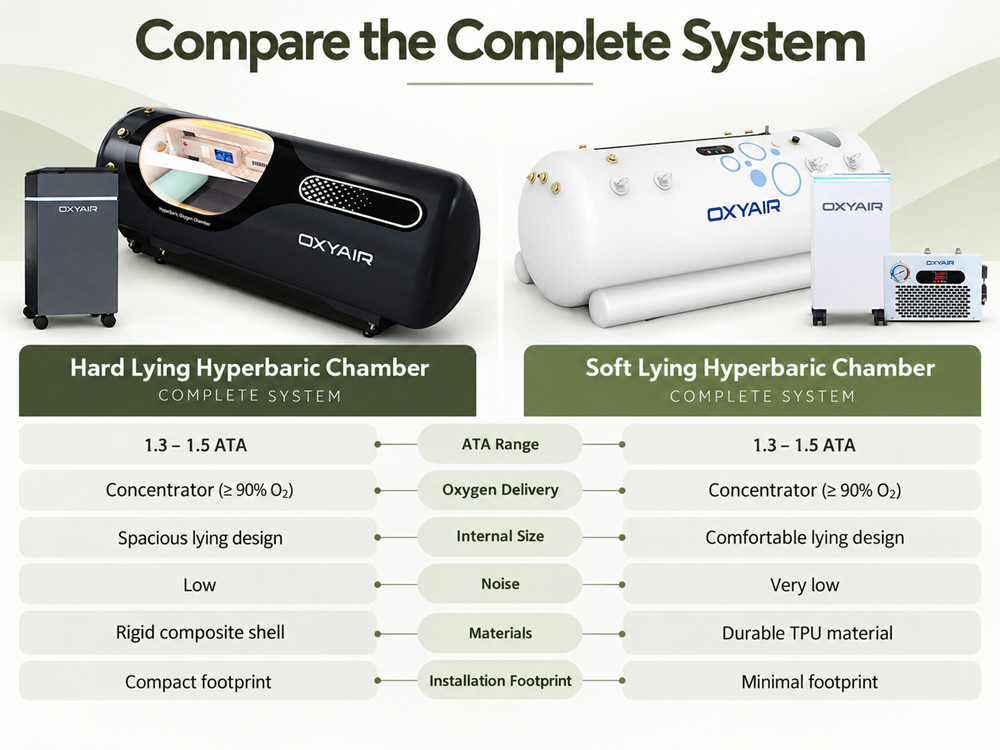
Pressure and oxygen delivery are separate functions. An air compressor raises chamber pressure. Oxygen may come from a concentrator, cylinders, a generator, or a facility gas line. Depending on the design, the user may breathe from the chamber atmosphere or through a mask, hood, or Built-In Breathing System (BIBS).
What does BIBS add?
In an air-pressurized chamber, BIBS provides a dedicated breathing-gas pathway. A properly designed system supplies oxygen to the user and manages exhaled gas through a separate exhaust route. This can help limit oxygen accumulation in the chamber atmosphere and support individual breathing stations.
Commercial buyers should verify the oxygen source, purity at rated flow, flow under chamber back pressure, number of breathing stations, mask design, exhaust route, and oxygen-monitoring system. Concentrator outlet purity alone does not prove the concentration actually inhaled; mask fit, available flow, back pressure, and breathing demand can all affect delivery.
3. Size: Plan for the User and the Facility
Internal dimensions affect comfort and capacity, while external dimensions determine whether equipment can be delivered and installed. Request internal diameter, usable length, entry dimensions, user-weight limit, and rated occupancy.
Calculate the installed footprint, including the chamber, compressor, oxygen equipment, cooling, operator access, and service clearance. Confirm doorway and elevator access, electrical service, weight, and floor-loading requirements.
4. Noise: Ask for the Test Conditions
Sound may come from compressors, oxygen equipment, cooling fans, valves, airflow, and pressure release. A claim such as “under 50 dB” has limited value unless the supplier states where, when, and how it was measured.
Was the reading taken inside or outside the chamber?
What was the distance from the equipment?
Were the compressor, concentrator, and cooling system all operating?
Was the chamber pressurizing, holding pressure, ventilating, or depressurizing?
Is the number an average dB(A) value or a peak reading?
A study of 41 multiplace facilities found that sound varied by operating phase and ventilation status. It does not establish a universal range for other chamber types, but shows why test conditions matter.
5. Materials: Look Beyond “Medical Grade”
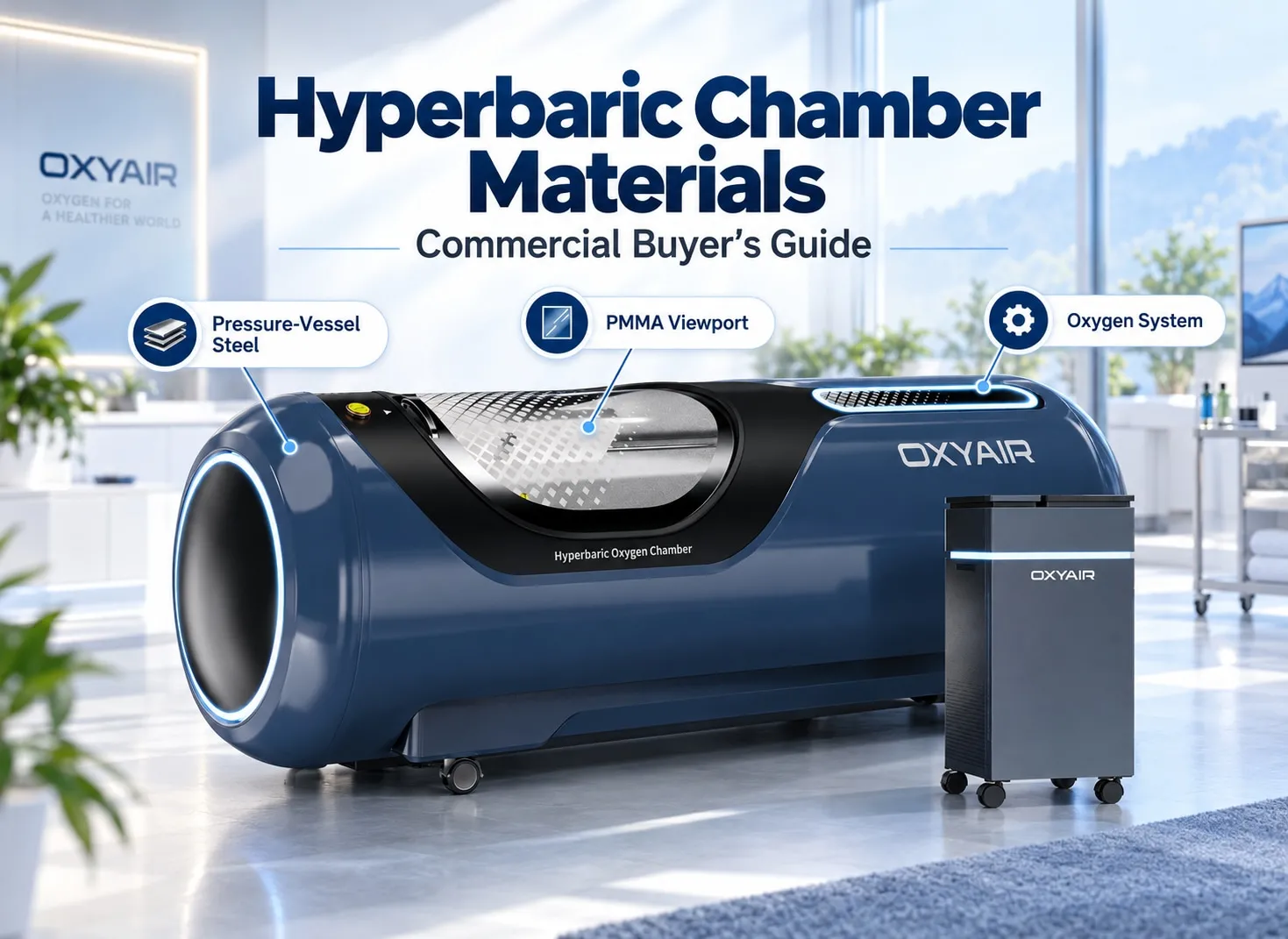
Flexible chambers may use reinforced polyester or nylon with polyurethane or TPU coatings. Rigid systems may use acrylic viewing sections with steel, aluminum, or other engineered pressure-retaining components. The material name alone does not confirm suitability.
Ask for the rated pressure and cycle life, oxygen-compatibility information, static-control and flame-performance documentation where applicable, approved cleaning products, viewport inspection requirements, and replacement availability for seals, zippers, hoses, and other wear parts. For medical-device purchasing, verify the exact model and market authorization rather than relying on a general “FDA registered” statement.
6. Commercial Buyer Checklist
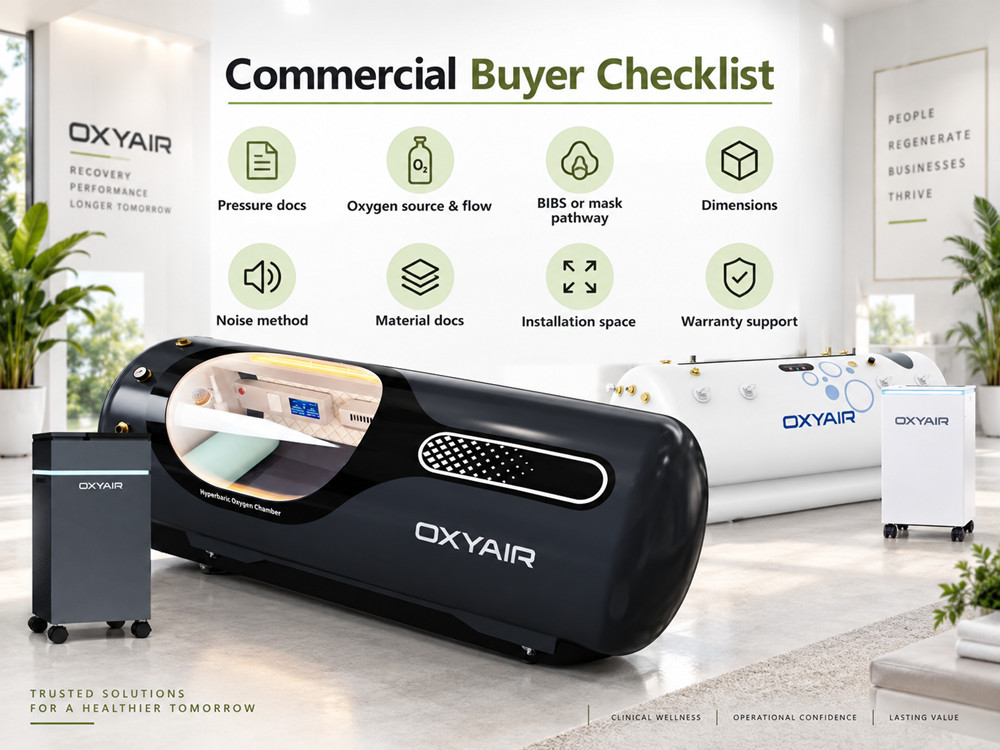
| Category | Information to Request |
|---|---|
| Pressure | Maximum ATA, adjustable range, change rate, supporting documents |
| Oxygen | Source, purity, flow under pressure, mask/BIBS, exhaust and monitoring |
| Capacity | Occupancy, internal dimensions, entry style and weight limit |
| Installation | Total footprint, weight, utilities, ventilation and service clearance |
| Noise | dB(A), location, distance, operating phase and equipment included |
| Materials | Shell, windows, seals, compatibility, cleaning and inspection needs |
| Support | Installation, training, warranty, maintenance and spare parts |
7. Frequently Asked Questions
Is higher ATA always better?
No. Maximum pressure is only one engineering specification. The right operating range depends on intended use, product authorization, protocol, and qualified guidance.
Is ATA the same as oxygen concentration?
No. ATA measures total ambient pressure. Oxygen concentration describes the percentage of oxygen in the gas the user breathes.
How should buyers compare chamber noise?
Compare readings taken under similar conditions, including measurement location, distance, operating phase, and all supporting equipment.
What documents should a supplier provide?
Depending on the market and intended use, request product specifications, operating manuals, test reports, pressure-vessel documentation, applicable regulatory records, maintenance guidance, and warranty terms.
Request a Configuration for Your Project
Share your target pressure, capacity, installation space, and market requirements with Olive Oxygen.
Request SpecificationsReferences
U.S. FDA: Safe Use of HBOT Devices · 21 CFR 868.5470 · NOAA: Pressure · PubMed: In-Chamber Sound Levels